
What to Consider Before Choosing Your Wedding Planner
Planning a wedding in Nairobi today is about more than aesthetics. The right wedding planner must orchestrate an emotionally significant day, manage complex logistics, and increasingly reflect your values around sustainability and social impact.
Whether you are a couple getting married, or a corporate decision‑maker supporting VIP weddings, staff nuptials, or branded celebrations, choosing a planner is a strategic decision – not a casual one.
Why Your Choice of Wedding Planner Matters
A wedding is one of the few events where emotion, brand, and ESG thinking intersect. In Nairobi’s fast‑paced environment, couples and organisations are looking for planners who can deliver glamour without guilt – beauty that does not ignore its footprint.
The planner you select will influence far more than your colour palette. They will shape how you use technology instead of paper, what you rent instead of buy, how food and logistics are managed, and whether your spending uplifts local Kenyan suppliers, from Kariokor leather artisans to Naivasha flower farms.
Before you sign any contract, evaluate your potential wedding planner across four pillars:
- Digital‑first guest experience
- The rental revolution and circular design
- Eco‑catering and smart logistics
- Local sourcing and cultural context
Throughout this guide we will also reference how Events Created With Love approaches these pillars for couples and brands who want a wedding that feels luxurious, yet aligns with modern sustainability expectations.
1. Digital First: Rethinking Invitations, Programs, and Guest Experience
In a Nairobi where almost every guest has a smartphone, insisting on paper‑heavy processes is no longer a sign of prestige – it is a sign of poor design. A serious wedding planner should be able to demonstrate a digital‑first strategy that reduces waste while elevating the guest journey.
Key Digital Touchpoints to Ask About
- Digital Invitations and Save‑the‑Dates: Can your planner coordinate branded e‑invites, personalised emails, and WhatsApp‑friendly designs that reflect your theme while saving on printing and courier runs?
- Online RSVP and Guest Management: Do they use reliable tools to track RSVPs, special dietary needs, and seating preferences in real time, instead of fragmented spreadsheets?
- QR‑Code Check‑In: Can guests be checked in via QR codes at the ceremony or reception, minimising queues and paper lists?
- Digital Programs: Are they able to design a single scannable QR code on the welcome board that leads to the running order, speeches, and special notes, instead of printing a program for every seat?
- Photo Sharing and Networking: Can the planner set up simple systems or QR links for guests to share photos and short messages, creating a shared digital album instead of relying only on formal photography?
A planner who understands digital experience will not only save you money and paper; they will also make the day feel smoother and more curated.
On the ground, companies like Events Created With Love already manage QR‑based registration and digital flows for corporate events. That expertise translates naturally into weddings, especially for couples and families who care about efficiency and ESG reporting.
Checklist: Digital‑First Capability
- Ask to see examples of previous digital invitations and RSVP flows.
- Confirm what guest‑management system they use and who owns the data.
- Clarify how they will accommodate older guests who may prefer more traditional formats.
- Discuss how digital tools can support your sustainability narrative without making the event feel “cold” or impersonal.
2. The Rental Revolution: Glamour without Guilt
Weddings have historically been associated with one‑time‑use decor, plastic accessories, and items that end up in a skip by midnight. A planner serious about today’s Nairobi – and tomorrow’s climate – should think in terms of rentals, re‑use, and circular design.
Why High‑Quality Rentals Are a Strategic Choice
Renting is no longer a cost‑saving afterthought; it is a design philosophy. Premium tents, furniture, tableware, and decor elements can be re‑used across multiple events when chosen well and maintained meticulously. This reduces waste and the carbon footprint of your celebration, while often giving you access to higher‑end looks than if you tried to buy everything from scratch.
Ask your wedding planner how they approach:
- Tents and Structures: Are they using stable, well‑maintained A‑frame, dome, or stretch tents that can be re‑skinned and re‑imagined, instead of custom one‑off builds that end up in landfills?
- Furniture: Do they work with a curated inventory of Chiavari chairs, cross‑back seats, lounge sets, and bars that can be dressed up with textiles instead of being replaced constantly?
- Lighting and Decor: Are candle holders, arches, stands, and props part of a re‑usable system, or will they be imported and discarded after one use?
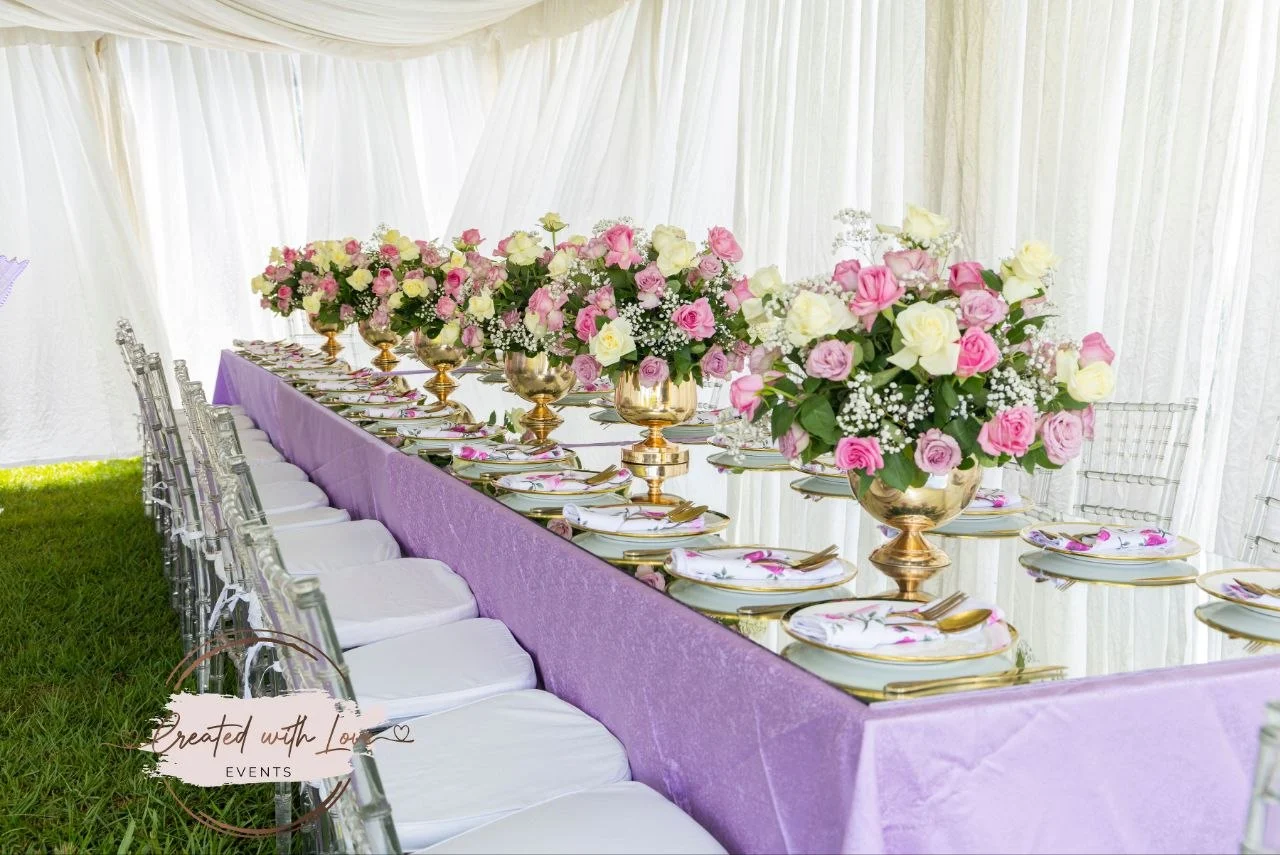
Events Created With Love is a good case study in this “rental revolution”. Their catalogue is built around quality pieces – from tents and event furniture to decor accessories – that can be re‑combined to create distinct looks for different couples. Instead of importing disposable novelty items, they focus on repeatedly “glamping up” spaces using what already exists, with fresh styling for each event.
Questions to Ask Your Planner about Rentals
- Where do your tents, furniture, and decor rentals come from, and how long are they designed to last?
- Do you maintain your own inventory, or do you rely entirely on third‑party suppliers?
- How do you minimise waste from flowers, signage, and props after the event?
- Can you show us a wedding where you re‑used structures but achieved a completely different look?
3. Eco‑Catering and Smart Logistics
No conversation about sustainable weddings in Nairobi can ignore catering and logistics. Between food waste, transport routes, and packaging, a wedding can either quietly align with your ESG ambitions or quietly undermine them.
Food Philosophy: From Menu to Leftovers
When evaluating a wedding planner, explore how they collaborate with caterers. You are looking for a partner who can balance culinary excellence with thoughtful sourcing and waste reduction.
- Local Sourcing: Do they favour catering partners who work with Kenyan producers – from fresh vegetables and meats to wines and juices – reducing the footprint of imported goods?
- Menu Design: Can they design menus that are generous but realistic for your guest count, instead of over‑ordering to show abundance?
- Dietary Inclusivity: Are vegetarian, vegan, and allergy‑friendly options incorporated thoughtfully, reflecting a modern, inclusive Nairobi?
- Food Waste Plan: What happens to leftovers? Can they be safely donated, or is there a clear plan to avoid unnecessary waste?
Logistics: Moving People and Materials Intelligently
Logistics choices can quietly increase emissions and stress. A capable planner will consider:
- Venue Selection: Are ceremony and reception locations close enough to minimise multiple long transfers across Nairobi traffic?
- Consolidated Transport: Can you use shared shuttles for guests, bridal party, or staff, reducing the number of vehicles on the road?
- Delivery Planning: Do they schedule decor, furniture, and technical deliveries smartly to avoid unnecessary trips?
Here again, internal systems matter. Planners who regularly handle tent and infrastructure hire as well as full event services tend to be better at consolidating deliveries and working with trusted logistics partners, because they see the full picture, not just decor in isolation.
Pro‑Tip: Aligning with Your ESG Story
If you or your organisation report on ESG, ask your planner if they can document basic sustainability metrics from your wedding – for example, percentage of local suppliers used, rental vs purchased items, or amount of paper avoided through digital tools. This does not need to be a formal audit, but a simple one‑page summary can be powerful for both personal reflection and corporate storytelling.
4. Local Context: Nairobi, Kariokor, and Naivasha
Sustainability in weddings is not only about what you avoid; it is also about who you uplift. Nairobi and its surroundings have rich ecosystems of artisans, growers, and makers whose work can add authenticity and depth to your celebration.
Sourcing from Local Artisans
Markets and workshops in areas like Kariokor are known for leatherwork, beadwork, and handcrafted accessories. Thoughtful planners can integrate locally made elements into your wedding design, such as:
- Hand‑beaded napkin rings or bridal party accessories.
- Leather‑tagged favours or luggage tags for destination weddings.
- Local woven baskets for flower petals or gift displays.
These details not only support local livelihoods; they give your wedding a sense of place that imported items cannot replicate.
Flowers with a Kenyan Story
Naivasha and other Kenyan flower‑growing regions provide world‑class blooms. Rather than shipping flowers from overseas, ask your planner how they work with Kenyan growers and florists to build arrangements that are both luxurious and low‑transport.
A planner with strong local networks can negotiate smartly with florists, re‑use arrangements between ceremony and reception, and design installations that look abundant without being wasteful.
Culture, Climate, and Practicality
Nairobi weddings must consider rain patterns, heat, and traffic. An experienced planner will adapt everything – from tent choice and floor types to backup ceremony settings – to the realities of your chosen season and location.
Before you commit, ask to see examples of how they have handled sudden weather changes, venue power issues, or access constraints. Their answers will tell you whether they treat sustainability as a mood board or as a practical, risk‑aware discipline.
Why Events Created With Love Fits the “Glamour without Guilt” Brief
Amid Nairobi’s growing field of wedding planners, Events Created With Love positions itself deliberately at the intersection of beauty, structure, and responsibility. Their approach is to “glamp up” spaces – taking tents, halls, or open grounds and transforming them into refined environments using reusable structures, layered textiles, and intelligent lighting rather than disposable gimmicks.
Because they also run strong corporate event and family event portfolios, their systems are robust: integrated logistics, rental catalogues, and entertainment options that already serve large organisations across Kenya. For couples (and the companies that support them), that means wedding planning that feels both personalised and operationally sound.
Pro‑Tip: Partnering with a Planner who Understands Both Emotion and ESG
If you work in HR, marketing, or procurement, you already know the reputational value of well‑executed, values‑aligned events. When you recommend or select a planner for a leadership wedding, staff nuptials, or associated celebrations, look for partners who can speak comfortably about ESG without turning the occasion into a lecture.
Events Created With Love is one of the Nairobi‑based teams that can articulate this balance: weddings that are romantic and visually rich, yet designed with re‑use, local supply, and smart logistics quietly embedded in the brief.
Final Checklist Before You Choose Your Wedding Planner
- Have they shown you at least two past weddings similar in scale and style to yours?
- Can they explain how they use digital tools to reduce paper and smooth guest experience?
- Do they rely on high‑quality rentals and reusable structures rather than disposable decor?
- How do they talk about catering, logistics, and waste – as an afterthought, or as part of design?
- Can they name specific Nairobi and Kenyan suppliers they work with for flowers, crafts, and services?
- Are they willing to document simple sustainability highlights from your event if you request it?
Ready to Talk about a Wedding with “Glamour without Guilt”?
If you are considering a wedding in Nairobi and want a planner who understands both aesthetics and responsibility, start with a conversation. A short briefing call or WhatsApp chat can quickly show you whether a planner listens, asks the right questions, and can translate your values into a concrete plan.
To explore how Events Created With Love can support your wedding or a wedding you are sponsoring:
- Visit the main site: Events Created With Love
- Review their wider capabilities: All Event Services
- See how they handle corporate‑grade logistics that often mirror complex weddings: Corporate Events in Kenya
- Explore how they design intimate family celebrations: Kids Parties Planner in Nairobi
WhatsApp Call to Action: For direct enquiries, concept discussions, or to share your wedding brief:
Send a WhatsApp message to +254 705 062 788 and mention that you are interested in a wedding that combines elegance with sustainability.
From there, you can explore dates, venues, and concepts – and decide if this is the partner you trust to design not just a beautiful day, but a wedding that genuinely reflects who you are and what you stand for.